An interactive journey through the eight homes that shaped jazz's most transcendent voice — from Hamlet, North Carolina (1926) to Dix Hills, Long Island (1967).
1926–1967
Lifespan
8
Residences
NC → NY
Hamlet to Dix Hills
By Ramsey Castaneda · With research assistance from correspondence with Dr. Lewis Porter and collector Yasuhiro Fujioka.
This project maps the physical spaces that shaped John Coltrane—from a small apartment in rural North Carolina to the Long Island home where he composed A Love Supreme.
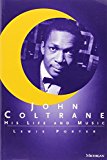
The research draws primarily from Dr. Lewis Porter's 1998 biography John Coltrane: His Life and Music, supplemented by correspondence with Porter and collector Yasuhiro Fujioka. Each address mentioned sent me to Google Street View, where I could see the houses, streets, and environments of Coltrane's everyday life.
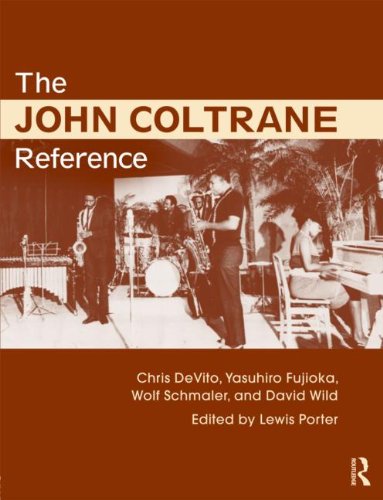
For deeper exploration, see The Coltrane Reference—an 800+ page monograph and perhaps the finest jazz research ever published.
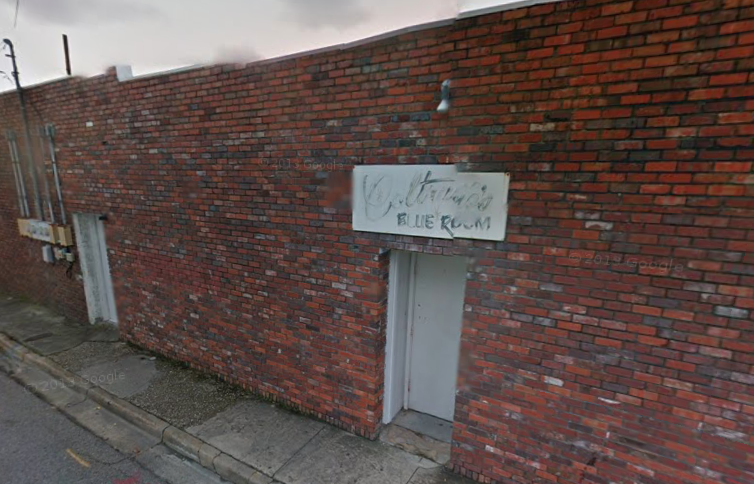
John Coltrane was born in this building, where his parents rented an apartment above what is now “Coltrane's Blue Room.” His father, J.R. Coltrane, worked as a tailor; his mother, Alice, as a domestic. Both grandfathers were A.M.E. Zion ministers.
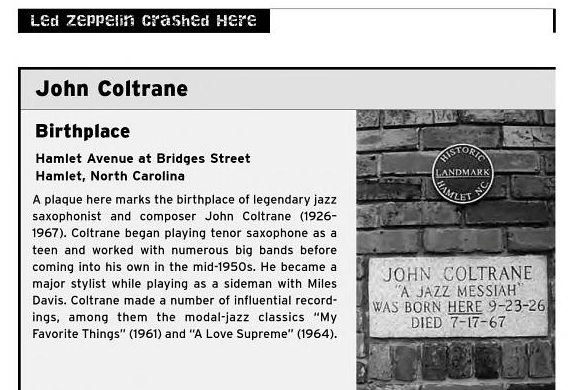
The building was preserved by Dr. Fred McQueen, who mounted the commemorative plaque. Coltrane's paternal grandparents lived nearby at 540 Charlotte Street.
Commemorative plaque From Led Zeppelin Crashed Here
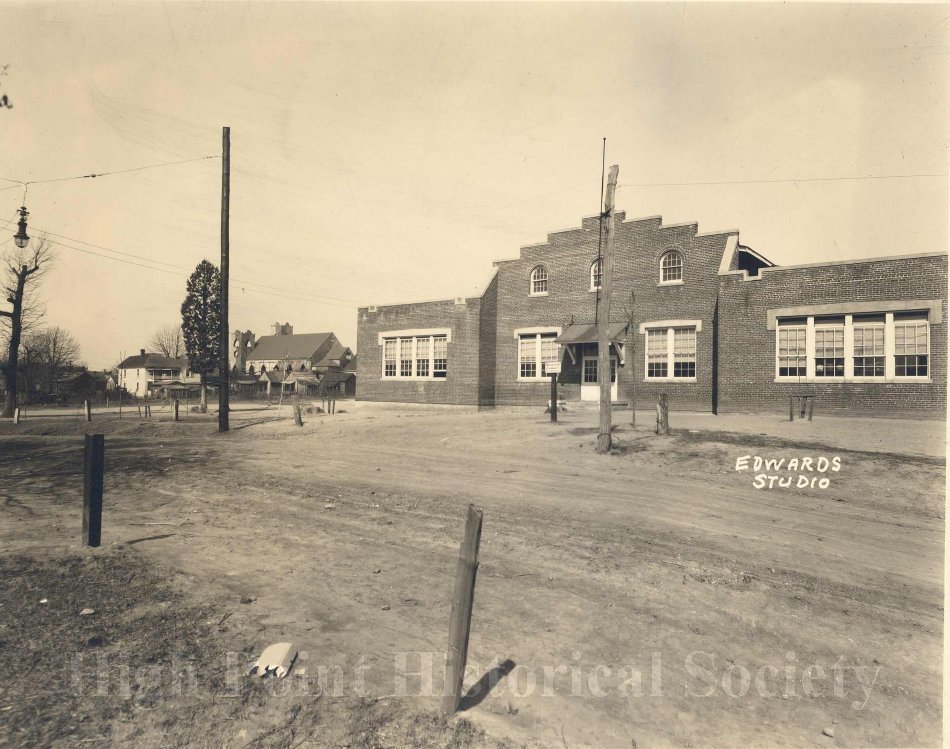
The Coltranes moved to High Point two months after John's birth (after a brief stay at 213 Price Street). His maternal grandfather, Reverend Blair, led the St. Stephen AME Zion Church nearby and helped establish Leonard Elementary School, where young John began his education in September 1932.
Leonard Street School Part of the building now houses the High Point Police Department
“During this seventh-grade school year of 1938 and 1939, Coltrane's family suffered a series of deaths that were to have disastrous consequences.”
— Lewis Porter, John Coltrane: His Life and Music
Reverend Blair built this house in 1922. Between 1938–1940, Coltrane lost his grandfather (whom he called “the dominant cat in the family”), his aunt, grandmother, and father. His mother moved away. John lived the rest of his High Point years alone here with boarders.
“It was just at this time that he began to take up music… from the beginning he is said to have practiced continuously, obsessively, as if practicing would bring his father back.”
— Lewis Porter
His friend David Young recalled: “For a while, I don't think he had anything but that horn.”
2017 Update
Documents from Yasuhiro Fujioka indicate High Point purchased this property in 2006. It may become a historic landmark.
After graduating high school, Coltrane joined his mother in Philadelphia and never truly returned to High Point—“the place where he lost all the men in his life,” as Porter writes.
Philadelphia's music scene proved transformative. He met Benny Golson and attended jam sessions at the Woodbine Club, where Duke Ellington and Coleman Hawkins played. He worked at a sugar refinery, as a soda jerk, and at Campbell's Soup while taking his first professional gigs.
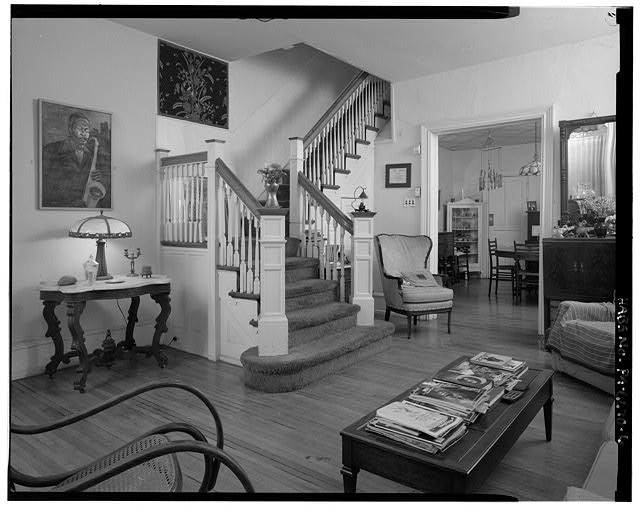
Coltrane bought this Strawberry Mansion house with his G.I. Bill—the first property he owned. Jam sessions here drew Dizzy Gillespie, Charlie Parker, and Sonny Rollins.
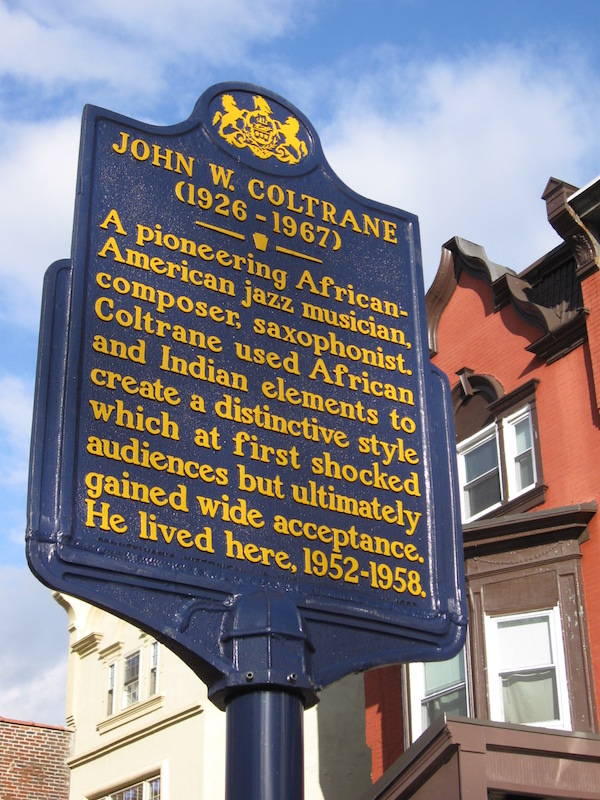
At one session he met Naima, who lived nearby. They married October 3, 1955—during Coltrane's first week with Miles Davis. A historical marker now stands outside.
Coltrane, Naima, and stepdaughter Saeeda moved to Manhattan months after he recorded his first album as a leader. This apartment witnessed his transformation into a bandleader and the creation of his most technically dazzling work.
“When Trane finished composing the music for A Love Supreme, he walked down the stairs from his music room as though he was ‘Moses coming down from the Mountain.’”
— Alice Coltrane, via Chasing Trane
He moved here with Alice and her daughter Michelle. Their children—John Jr., Ravi, and Oran—were all born in this house. Coltrane died here on July 17, 1967.
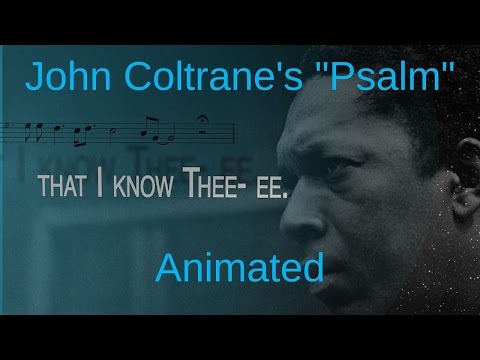
I created this video in 2015, combining Coltrane's poem with the recording of “Psalm.”